
1 Background
Voltage measurement of the battery or system power is critical to monitor the system performance and stability, especially in applications like IoT, Wearable Devices, Automotive, Power metering, etc.
A simple measurement is to use the ADC to measure the VCC value based on the circuitry, as shown in the figure below.
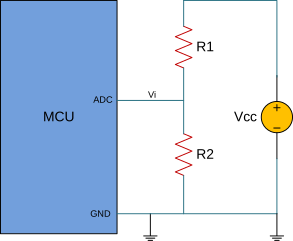
Once VIN is determined, the VCC can be calculated by the formula:
However, ignoring the influence of a temperature drift to the resistances, there is one significant disadvantage in this approach: it will constantly consume power. In some low power applications with battery, obviously this is not acceptable.
Another improved approach is to add a switch to the circuitry. As shown in the figure below, once a measurement is needed, the switch is programmed to switch ON. If the measurement is finished, the switch is set to OFF status. The circuitry will not work and consume power when the switch is in the OFF status.
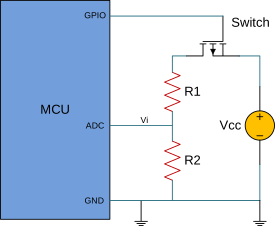
Although this improvement will decrease the power consumption from the external resistors, the MCU I/O resources have to be occupied, and still this is not acceptable in some MCU low pin count applications. Sometimes the measuring accuracy becomes low as the resistance will drift due to temperature changes. Besides, the response from the switch ON command to be ready for accurate test is quite slow due to the internal capacitor charging of the ADC peripheral, as shown in the figure below.
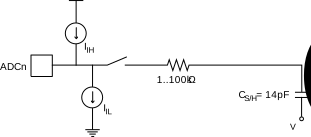
The question is, will there be any other approach with very low power consumption, quick response, and few external components? The answer is - YES.
This application note describes a quick voltage measurement without any I/O resources or external components.