
1.1.4 Illustration
(Ask a Question)This section describes an example for testing the performance of IBIS-AMI model using PolarFire evaluation kit.
- Device and Setup Details
- Device Used: MPF300T-1FCG1152
- Transceiver block: Two Lane 0 is used for measurement
- Dedicated internal reference clock is used for the SerDes block (156.25 MHz)
- LVDS25 IO standard is used to reference clock input
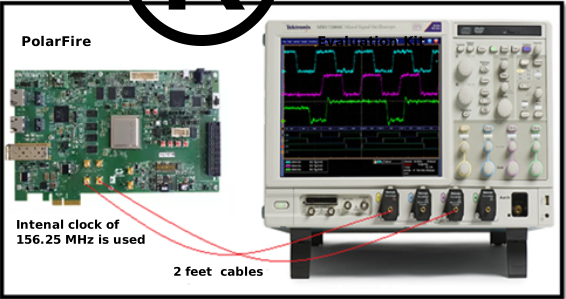
- 23 GHz Tektronix®(DPO72304) scope and 100G samples/sec setting is used for measuring jitter and plotting eye
- Two feet long cable (part# Sucoflex 100 126E) is used for connecting the Tx ports to the scope
- 2.3 inch long trace is connecting the device and the Tx SMA ports
- Clock recovery configuration method: PLL-Custom BW, PLL Model: Type II and Damping: 700m
In the measurement, the appropriate Tx settings is loaded to the silicon through SmartDebug as explained in the SmartDebug Flow section. Use the inbuilt PRBS31 generator to send the data out. The following figure shows the hardware setup used for the measurement.
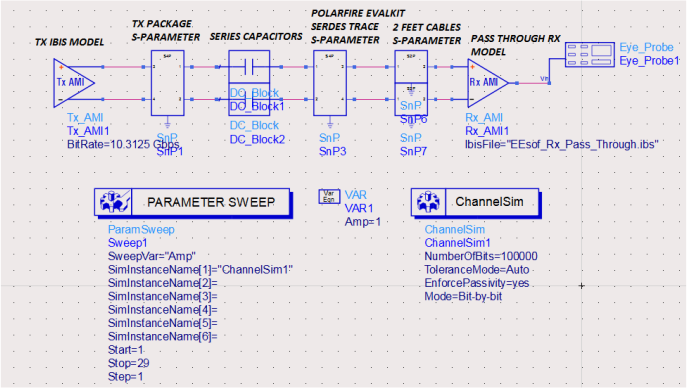
The IBIS-AMI Tx model is connected to pass through Rx model which is a simple 100Ω termination through die parasitic, package, board and 24 inch cable s-parameter model. The measurement environment is created virtually through the design in Advanced Design System (ADS).
Parameter sweep option is used to test the 29 different de-emphasis setting marked as 1 to 29 with each corresponding to a specific value of signal amplitude and de-emphasis. The following figure shows the correlation between measurement and IBIS-AMI simulation for the following settings:
- Tx Amplitude: 800 mV
- De-emphasis: 0 dB
- Tx Termination: 150Ω
- Data Rate: 10.3125 Gbps
The following figure shows that the simulated Tx Eye correlates well with measurement.
