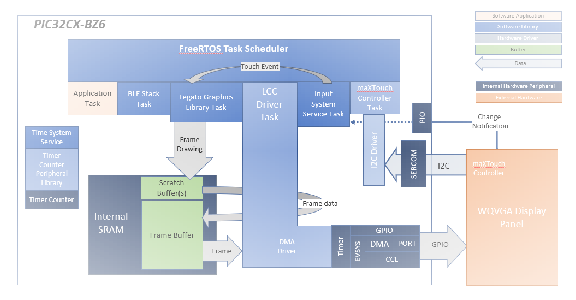
The PIC32CX-BZ6 is equipped with a Direct Memory Access (DMA)
peripheral that is used to transfer pixel data without CPU intervention. In this design, one
line of frame data is sent through the GPIO port at one time. A timer interrupt is used to
trigger the next DMA transfer. To generate the Pixel Clock signal, the design routes DMA
transfer complete events to the CCL via EVSYS. The CCL receives the event and generates a
logic pulse for the pixel clock. In this design the frame buffer is stored and maintained in
the internal data memory of PIC32CX-BZ6. Mapping color to
the display is done by using the GPIO port data lines. This design uses eight bpp color mode,
therefore eight data lines are used. Figure 2-1. PIC32CX-BZ6 DMA-Based Pixel Data Transfer and Pixel Clock Generation for 8-BPP
Display Output
The Bluetooth® Low Energy LCC project is also running the Bluetooth LE stack. This design configures the application as a Bluetooth LE central device that is capable of connecting up to eight peripherals. Both the graphics task and Bluetooth LE tasks are managed using FreeRTOS. See the Task Priority for a complete list of tasks.
DS70005655A
The online versions of the documents are provided as a courtesy. Verify all content and data in the device’s PDF documentation found on the device product page.