
40.5 External Reset Circuit
The external Reset circuit is connected to the RESET pin when the external Reset function is used. The circuit is not necessary when the RESET pin is not driven low externally by the application circuitry.
The reset switch can be removed if a manual reset is not desired. The RESET pin itself has an internal pull-up resistor, therefore, adding an external pull-up resistor is optional.
A pull-up resistor ensures that the reset does not go low and unintentionally cause a device reset. An additional resistor has been added in series with the switch to safely discharge the filtering capacitor, thereby preventing a current surge when shorting the filtering capacitor, which can cause a noise spike that may negatively affect the system.
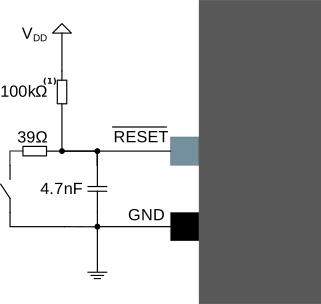
The following reset circuit is intended to improve EFT immunity but does not filter low-frequency glitches, which makes it unsuitable as an example for applications requiring debouncing on a reset button.
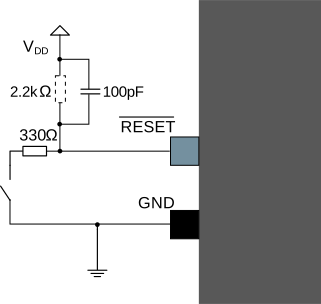
- The device features an internal pull-up resistor on the RESET pin; therefore, an external pull-up resistor is optional.
- These values are provided only as a typical example. Refer to the Power Supply Electrical Characteristics to determine the values specified in the system parameters to meet reset timing requirements (TRST).