Note: The graphs and tables provided following this note are a statistical summary based on a limited number of samples and are provided for informational purposes only. The performance characteristics listed herein are not tested or guaranteed. In some graphs or tables, the data presented may be outside the specified operating range (e.g., outside specified power supply range) and therefore outside the warranted range.
Figure 4-1. VIN Operating Current vs. Input Voltage and Temperature – HIBERNATE Mode (LPM = HIGH, PWRHLD = HPM = LOW)
Figure 4-2. Buck1 Efficiency vs. Load Current (VOUT1 = 3.3V)
Figure 4-3. VIN Operating Current vs. Input Voltage and Temperature – Low-Power Mode (LPM = PWRHLD = HIGH, HPM = LOW)
Figure 4-4. Buck2 Efficiency vs. Load Current (VOUT2 = 1.8V)
Figure 4-5. VIN Operating Current vs. Input Voltage and Temperature – Active Mode (LPM = PWRHLD = HIGH, HPM = LOW).
Figure 4-6. Buck3 Efficiency vs. Load Current (VOUT3 = 1.2V)
Figure 4-7. MOSFET RDS(ON) vs. Temperature
Figure 4-8. Buck4 Efficiency vs. Load Current (VOUT4 = 0.9V)
Figure 4-9. LDO1, LDO2 Dropout Voltage vs. Load Current
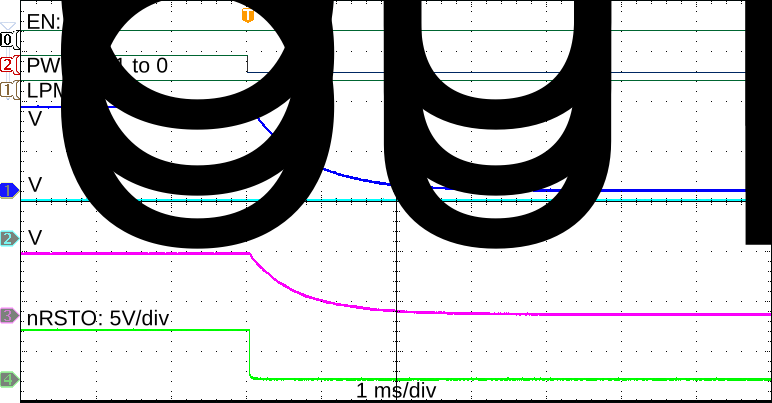
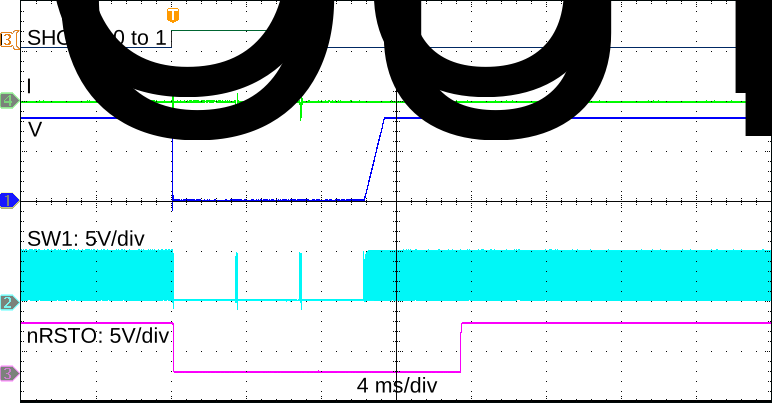
Figure 4-20. Output Short Circuit on Buck1 – HCPEN = 1
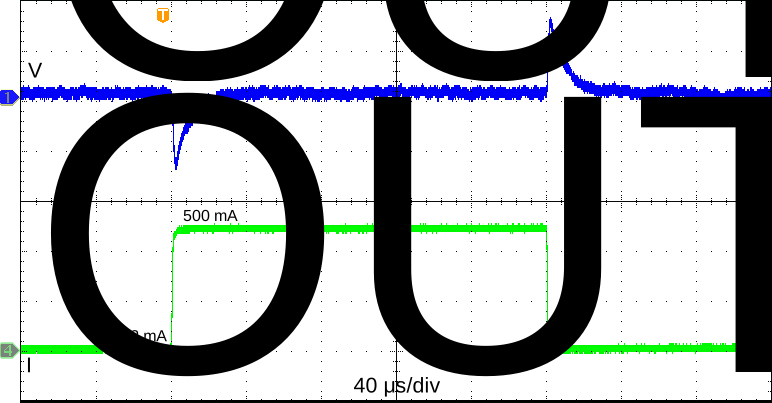
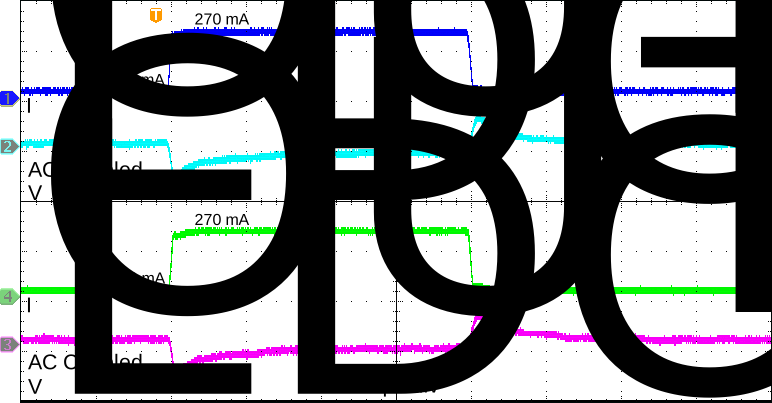
Figure 4-21. LDO1, LDO2 Load Transient Response
DS20007136A
The online versions of the documents are provided as a courtesy. Verify all content and data in the device’s PDF documentation found on the device product page.