2 Network Architecture
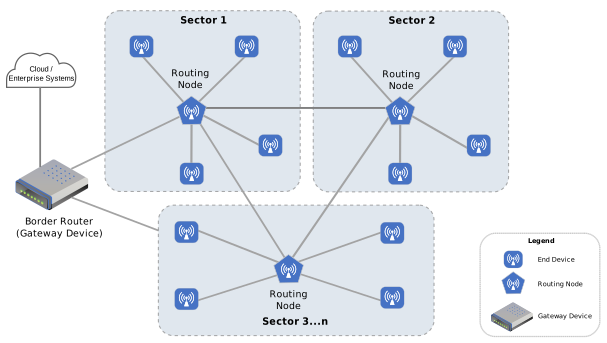
In real-world environments, multiple devices are typically co-located within a single room and must also communicate with devices in adjacent rooms. To accurately model this environment and manage the network effectively, our architecture organizes the network into sectors.
A sector is a logical grouping of nodes mapped to a physical area such as a room, zone, or floor section. This structure aligns the network with real deployment environments and offers key advantages:
- Intra-sector communication is optimized for low latency and high reliability.
- Inter-sector traffic follows defined paths, reducing unnecessary multi-hop traversal.
- Network growth is incremental; new sectors are added without restructuring existing ones.
The network incorporates devices in distinct functional roles:
- Routing nodes form the mesh backbone, forwarding multi-hop traffic and maintaining connectivity tables. They are the core enablers of extended-range communication.
- End devices connect through routing nodes, leveraging the multi-hop infrastructure to reach distant peers without bearing routing overhead.
- Gateway devices bridge the mesh to external networks and cloud systems, serving as the transition point between the mesh and enterprise infrastructure.