
1 Use Cases
The Nano Debugger can be used in many ways. Here are some examples.
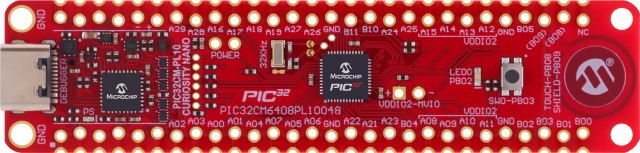
Curiosity Nano MCU Boards
Curiosity Nano MCU boards are entry-level development boards that provide a uniform way to evaluate new silicon products from Microchip. The board pinout is standardized and mapped to the device pinout in a logical, systematic manner. This enables the use of a set of base boards to provide peripherals and features across all MCU boards.
Custom Development Kit
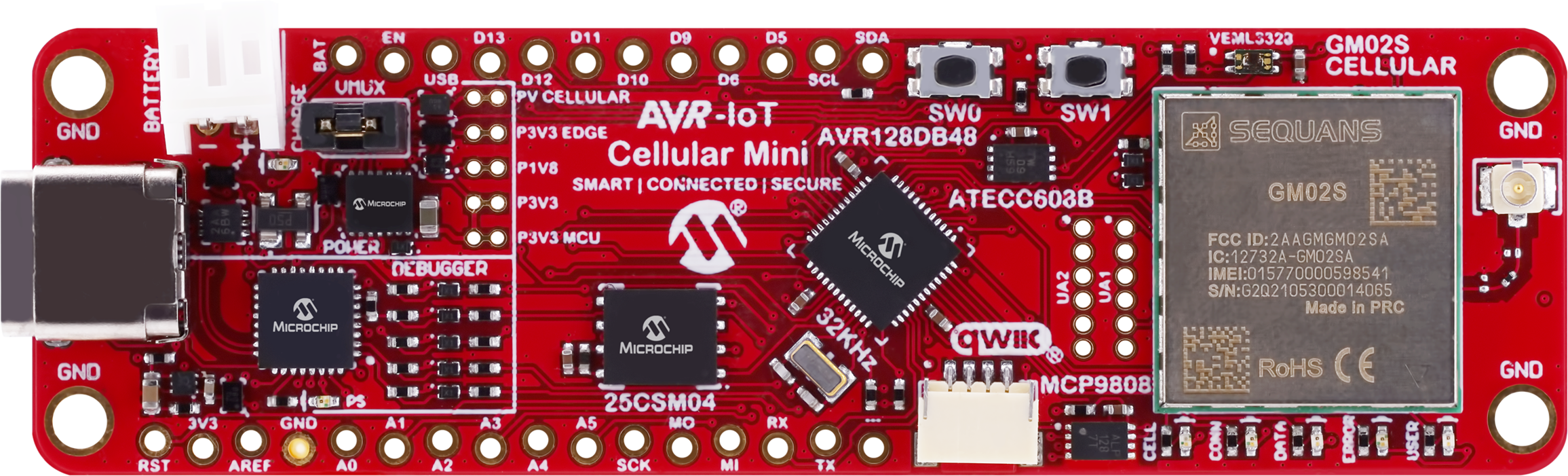
The Nano Debugger can be used on any development kit with an ARM® Cortex or modern AVR® microcontroller.
An example is the AVR-IoT Cellular Mini
Making a Standalone Debugger
When mounted on a development kit, the Nano Debugger provides both debugger and board control functionality. In a standalone implementation, the Nano Debugger no longer has full control of its environment and has no knowledge of the target device because it is not permanently mounted to the board. In this configuration, the Nano Debugger is a cost-effective debugger with an optional Virtual Serial Port bridge.