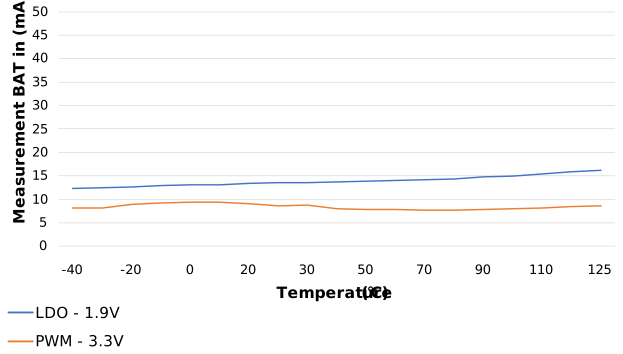
43.2.29 Bluetooth Low Energy RF Characteristics
| AC Characteristics | Standard Operating Conditions: VDD = 1.9V to 3.6V (unless otherwise stated) Operating Temperature: -40°C ≤ TA ≤ +85°C for Industrial Temp -40°C ≤ TA ≤ +125°C for Extended Temp | ||||||
|---|---|---|---|---|---|---|---|
| Param. No. | Symbol | Characteristics | Min. | Typ.(1) | Max. | Units | Conditions(2) |
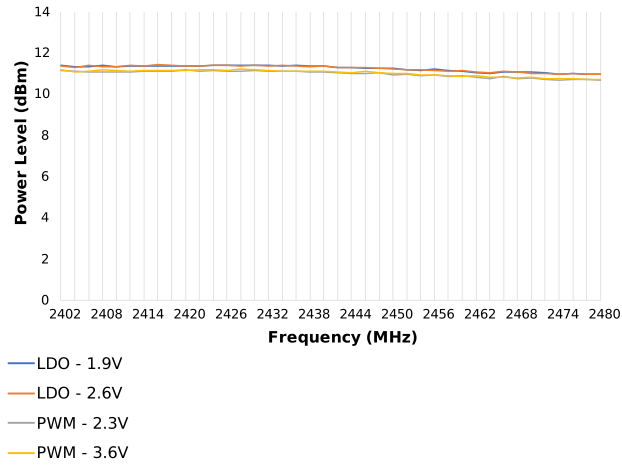
| BTG1 | FREQ | Frequency range of operation | 2402 | — | 2480 | MHz | — |
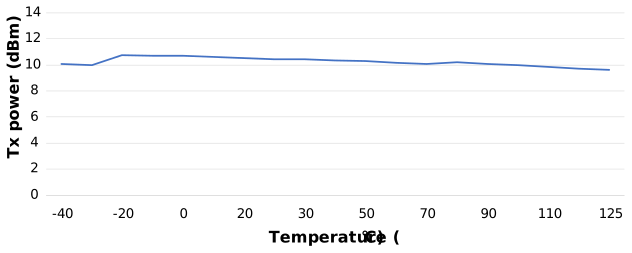
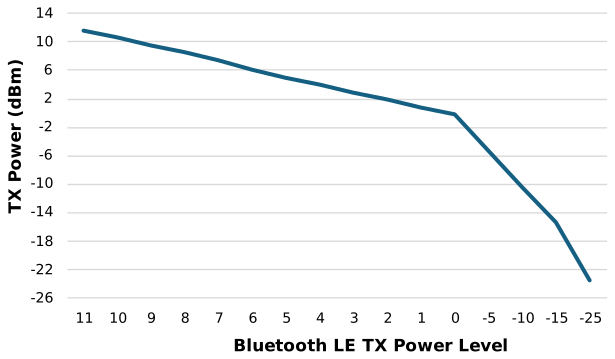
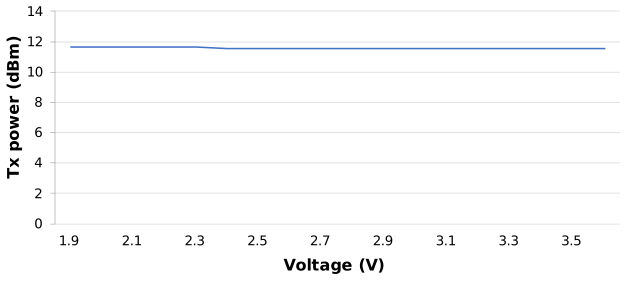
| BTTX1 | TXPWR:PA | Bluetooth® transmit power PA | — | 11 | — | dBm | — |
| BTX2 | TXIB:1MBPS | In-band emission for FTX ± -2 MHz | — | -40 | — | dBm | — |
| In-band emission for FTX ± -(3+N) MHz | — | -46 | — | dBm | — | ||
| BTX3 | TXIB:2MBPS | In-band emission for FTX ± -4 MHz | — | -48.5 | — | dBm | — |
| In-band emission for FTX ± -5 MHz | — | -52 | — | dBm | — | ||
| In-band emission for FTX ± -(6+N) MHz | — | -47.5 | — | dBm | — | ||
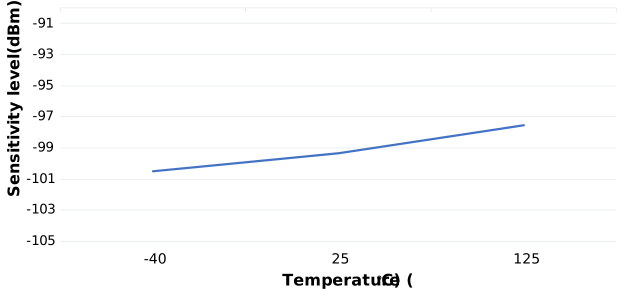
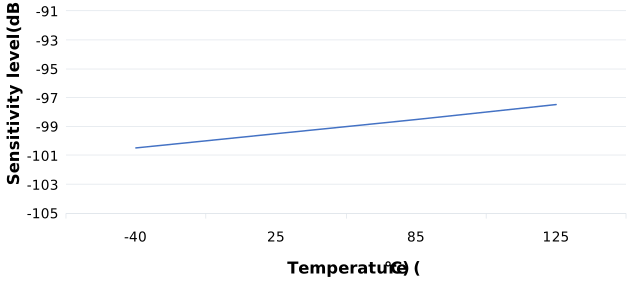
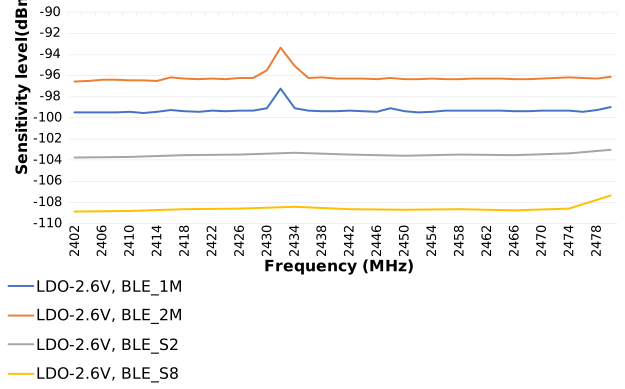
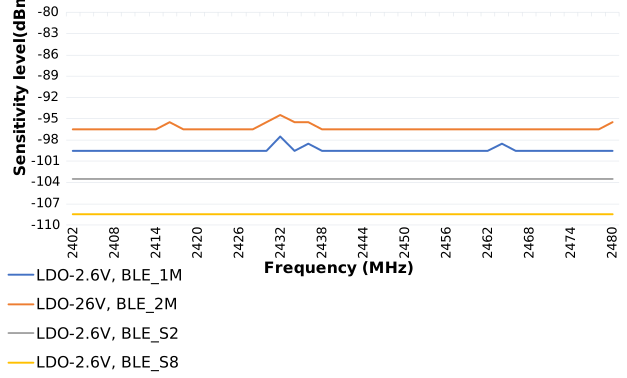
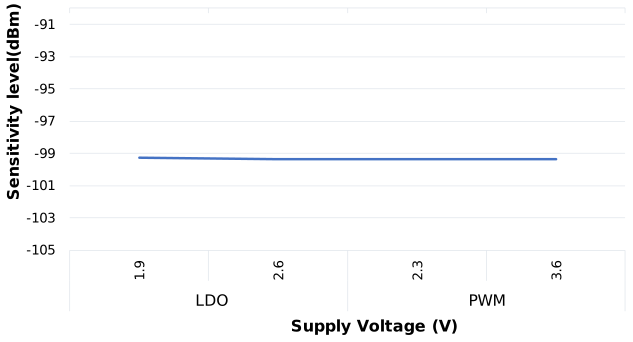
| BTRX1 | RXSENSE | Receiver sensitivity at 1 Mbps | — | -99 | — | dBm | — |
| Receiver sensitivity at 2 Mbps | — | -96 | — | dBm | — | ||
| Receiver sensitivity at S=8 | — | -108.5 | — | dBm | — | ||
| Receiver sensitivity at S=2 | — | -103.5 | — | dBm | — | ||
| BTRX2 | MAXINSIG | Maximum input signal level at 1 Mbps | — | 0 | — | dBm | — |
| Maximum input signal level at 2 Mbps | — | 0 | — | dBm | — | ||
| Maximum input signal level at S=2 | — | 0 | — | dBm | — | ||
| Maximum input signal level at S=8 | — | 0 | — | dBm | — | ||
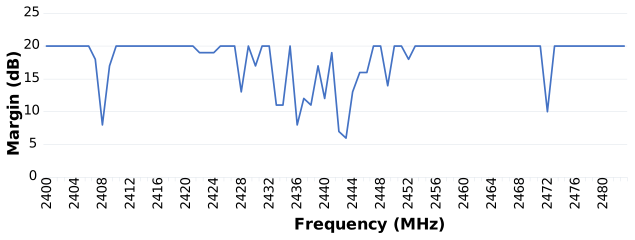
| BTRX3 | CI1M:COCH | C/I Co channel rejection | — | 12 | — | dB | — |
| CI1M: ± -1 MHz | C/I adjacent channel rejection | — | 16 | — | dB | — | |
| CI1M: ± -2 MHz | C/I adjacent channel rejection | — | 6 | — | dB | — | |
| CI1M:ADJ(3+n) | C/I alternate channel rejection | — | 6 | — | dB | — | |
| CI1M:IMG | C/I image frequency rejection | — | 11 | — | dB | — | |
| CI1M:IMG ± -1 MHz | C/I adjacent channel to image freq rejection | — | 12 | — | dB | — | |
| BTRX4 | CIS2:COCH | C/I Co channel rejection | — | 8 | — | dB | — |
| CIS2: ± -1 MHz | C/I adjacent channel rejection | — | 18 | — | dB | — | |
| CIS2: ± -2 MHz | C/I adjacent channel rejection | — | 19 | — | dB | — | |
| CIS2:ADJ(3+n) | C/I alternate channel rejection | — | 6 | — | dB | — | |
| CIS2:IMG | C/I image frequency rejection | — | 20 | — | dB | — | |
| CIS2:IMG ± -1 MHz | C/I adjacent channel to image freq rejection | — | 13 | — | dB | — | |
| BTRX5 | CIS8:COCH | C/I Co channel rejection | — | 3 | — | dB | — |
| CIS8: ± -1 MHz | C/I adjacent channel rejection | — | 20 | — | dB | — | |
| CIS8: ± -2 MHz | C/I adjacent channel rejection | — | 17 | — | dB | — | |
| CIS8:ADJ(3+n) | C/I alternate channel rejection | — | 3 | — | dB | — | |
| CIS8:IMG | C/I image frequency rejection | — | 19 | — | dB | — | |
| CIS2:IMG ± -1 MHz | C/I adjacent channel to image freq rejection | — | 15 | — | dB | — | |
| BTRX6 | CI2M:COCH | C/I Co channel rejection | — | 11 | — | dB | — |
| CI2M: ± -2 MHz | C/I adjacent channel rejection | — | 12 | — | dB | — | |
| CI2M: ± -4 MHz | C/I adjacent channel rejection | — | 12 | — | dB | — | |
| CI2M:ADJ(6+2n) | C/I alternate channel rejection | — | 11.5 | — | dB | — | |
| CI2M:IMG | C/I image frequency rejection | — | 12 | — | dB | — | |
| CI2M:IMG ± -2 MHz | C/I adjacent channel to image freq rejection | — | 11 | — | dB | — | |
| BTRX7 | BLOCK1M:<2 GHZ | Blocking performance from 30-2 GHz | — | 20 | — | dB | — |
| BLOCK1M:2 GHZ<SIG<2399 MHz | Blocking performance from 2003-2399 MHz | — | 18 | — | dB | — | |
| BLOCK1M:2484 MHZ<SIG<2977 MHz | Blocking performance between 2484-2997 MHz | — | 20 | — | dB | — | |
| BLOCK1M:3 GHZ<SIG<12.75 GHz | Blocking performance between 3-12.5 GHz | — | 18 | — | dB | — | |
| BTRX8 | BLE1M:INTERMOD | Inter modulation performance for BLEM | — | 10.5 | — | dB | — |
| BLE2M:INTERMOD | Inter modulation performance for BLEM | — | 11.5 | — | dB | — | |
Note:
- Data in the “Typ” column is at TA = 25°C.
- This parameter is characterized but not tested in manufacturing.
| AC Characteristics(3) | Standard Operating Conditions: VDD = 1.9V to 3.6V (unless otherwise stated) Operating Temperature: -40°C ≤ TA ≤ +85°C for Industrial Temp -40°C ≤ TA ≤ +125°C for Extended Temp | ||||||||
|---|---|---|---|---|---|---|---|---|---|
| Param. No. | Symbol | Characteristics | RF Power | CPU Frequency | Min. | Typ.(1) | Max. | Units | Conditions(2) |
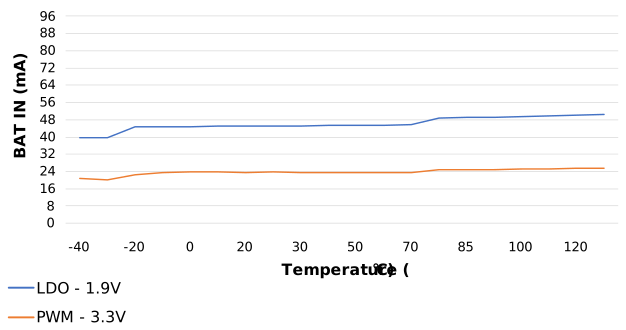
| IBLETX1 | IDDTXPA1M | Current consumption with TX in MLDO mode 1 Mbps | +11 dBm | 64 MHz | — | 44.5 | — | mA | — |
| Current consumption with TX in BUCK mode 1 Mbps | 23.2 | ||||||||
| IBLETX2 | Current consumption with TX in MLDO mode 1 Mbps | +11 dBm | 32 MHz | — | 41.8 | — | mA | — | |
| Current consumption with TX in BUCK mode 1 Mbps | 21.8 | ||||||||
| IBLETX3 | Current consumption with TX in MLDO mode 1 Mbps | 10 dBm | 64 MHz | — | 39.8 | — | mA | — | |
| Current consumption with TX in BUCK mode 1 Mbps | 20.9 | ||||||||
| IBLETX4 | Current consumption with TX in MLDO mode 1 Mbps | 10 dBm | 32 MHz | — | 37 | — | mA | — | |
| Current consumption with TX in BUCK mode 1 Mbps | 19.6 | ||||||||
| IBLETX5 | Current consumption with TX in MLDO mode 1 Mbps | 0 dBm | 64 MHz | — | 19.7 | — | mA | — | |
| Current consumption with TX in BUCK mode 1 Mbps | 11.5 | ||||||||
| IBLETX6 | Current consumption with TX in MLDO mode 1 Mbps | 0 dBm | 32 MHz | — | 17 | — | mA | — | |
| Current consumption with TX in BUCK mode 1 Mbps | 10.2 | ||||||||
| IBLERX1 | IDDRXBLE1M |
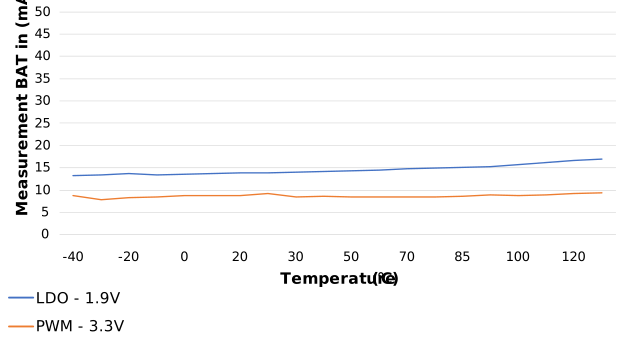
Current consumption at RX signal MLDO mode | -90 dBm | 64 MHz | — | 14 | — | mA | — |
| Current consumption at RX signal BUCK mode | 8.8 | ||||||||
| IBLERX2 |
Current consumption at RX signal MLDO mode | -90 dBm | 32 MHz | — | 11.2 | — | mA | — | |
| Current consumption at RX signal BUCK mode | 7.5 | ||||||||
Note:
- Data in the “Typ” column is at VDD = 3.3V, TA = 25°C.
- This parameter is characterized but not tested in manufacturing.
- The current number includes the FW default operation current consumption.